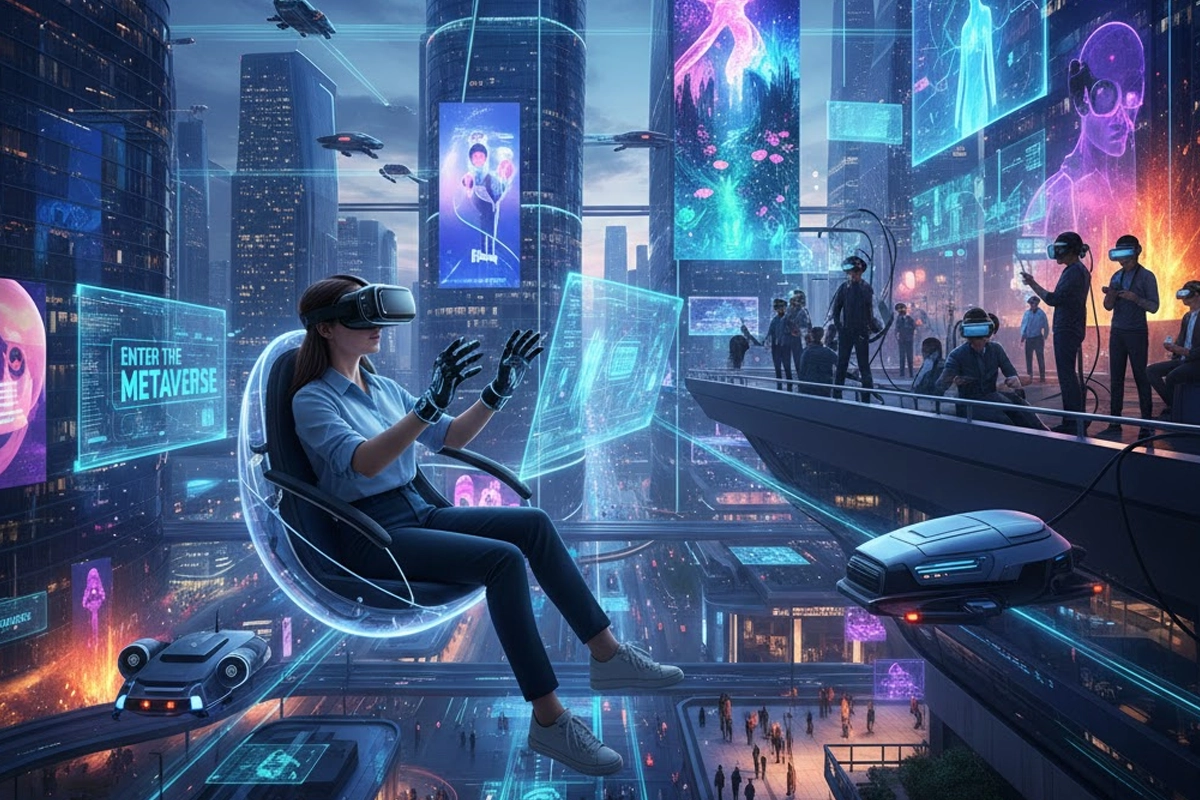
Currently we are living in the Fourth Industrial Revolution (IR 4.0). The job market our current students will enter in ten years will look radically different from today’s. Skills that were once considered niche—coding, data analysis, and understanding automation—are rapidly becoming the new foundational literacy.
In this landscape, traditional education models that rely solely on textbooks and theoretical examinations are insufficient. To truly prepare students for the future, schools must integrate experiential learning environments that mirror the real world. This is why Artificial Intelligence (AI) and Robotics labs are no longer optional luxuries for elite institutions; they are essential infrastructure for any future-ready school.
Moving from Consumers to Creators Today’s students are “digital natives,” surrounded by technology. However, they are primarily consumers of this technology—swiping apps, watching streams, and playing games. An AI and Robotics lab shifts this dynamic, turning passive consumers into active creators.
When a student programs a robot to navigate a maze, they aren’t just learning code; they are learning logic, sequence, and perseverance. When they train a simple AI model to recognize images, they are demystifying the algorithms that shape their social media feeds, fostering critical thinking about data privacy and ethics.
Why “Rote Learning” Fails in the 21st Century The biggest advantage of a Robotics or AI lab is the freedom to fail. In a traditional classroom, failure is often penalized with a low grade. In a Robotics lab, failure is a necessary step toward success. A robot falls over? The code throws an error? The student must analyze the problem, hypothesize a solution, test it, and iterate. This cycle builds resilience and complex problem-solving skills that memorizing definitions simply cannot provide.
Integrating Pedagogy with Technology A common pitfall schools encounter is treating these labs as separate “activity rooms” disconnected from the core curriculum. A rack of expensive robots that are only used once a week for an optional club is a wasted investment.
For these labs to be effective, they need to be integrated into the school’s academic fabric. This is the core philosophy at Abhilasha Commercial. Abhilasha Commercial don’t just sell educational equipments; we provide curricular solutions. We help schools map robotics projects to physics concepts like torque and friction, or connect AI data analysis to mathematics statistics lessons.
Conclusion: Investing in Relevance The schools that thrive in the coming decade will be those that bridge the gap between academic theory and digital reality. An AI and Robotics lab is a signal to parents, students, and the community that your institution is committed to relevant, forward-looking education.
By partnering with Abhilasha Commercial to establish these state-of-the-art facilities, you are not just buying equipment; you are investing in a methodology that empowers your students to become the innovators, leaders, and problem-solvers of tomorrow’s economy.
Comments are closed